
WE THE VESSELS
Images from an essay in progress

Dear readers: A brief introduction to a new focus in the Bettina | Has Books on the Boil stack, as I’ve thankfully come to a point of clarity in my writing. For the past two years, I have spent as much time as possible in Sicily, amassing knowledge and images, treasuring the gift of people I have met and the experiences we shared. It has been an intense deep-dive, which continues even as the writing begins in earnest. I’m tweaking this Substack in the hope that you will enjoy some early, random notes as I plough through nearly 15,000 photographs and several weeks’ worth of voice recordings. As always, I am grateful for your support, and welcome your comments.
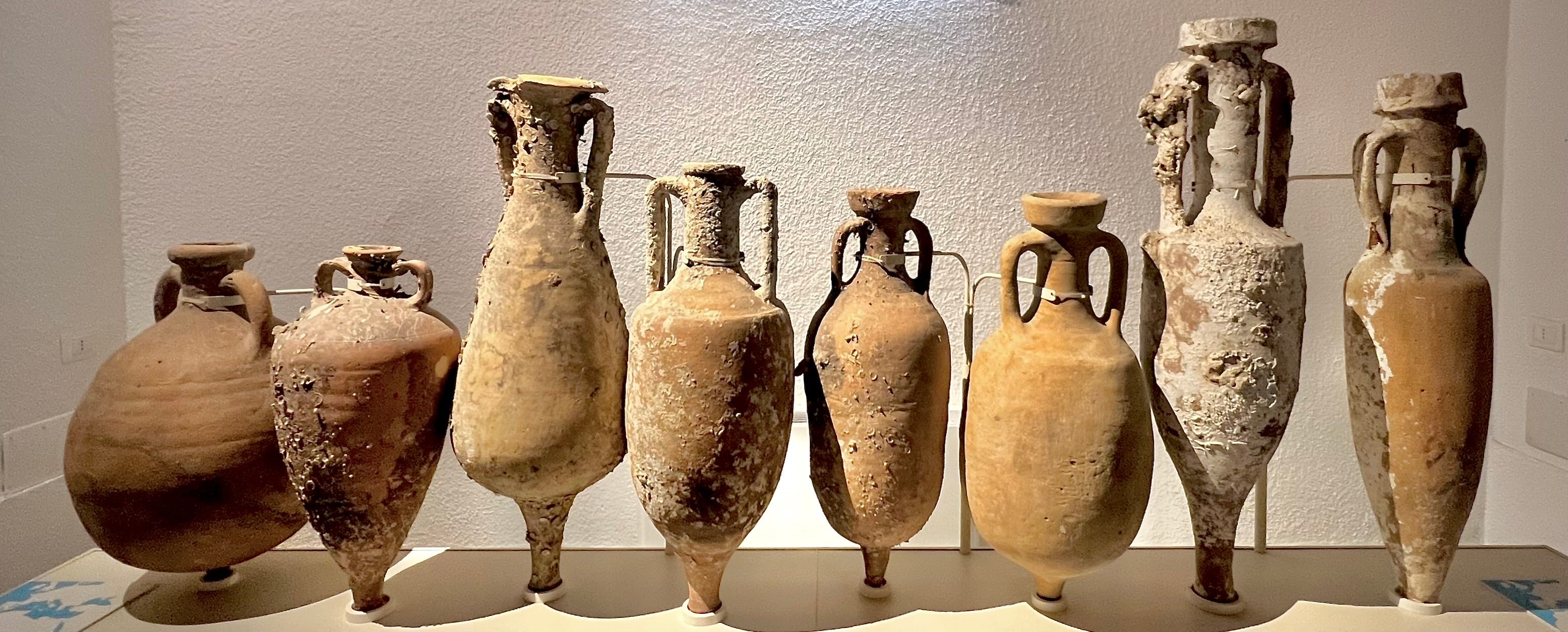
When did our ancestors recognise the possibilities in a handful of wet, pliant earth? Before they began to plant and not just gather; before they began to tend and not just hunt? Before they carved birds and snakes and cryptic zigzags; or pressed shapes into tablets of clay? Before they patted mud into bricks, though they hadn’t yet a word for ‘home’? Or longer still before, when Prometheus gave them fire for warmth and to cook their food, was it then? When did early humans realise they needed a pot?
In many faiths we are clay itself. How poetic that when we first started to make things, it was from this earthy material. Kneading, moulding, pressing with our hands and fingers in an act so old that it might be the reason we personify pottery and it us. Consider how very similar we are: we share mouths and lips and necks. We too have shoulders, a body and feet.
We are both repositories.
We are vessels built to receive.
We are empty spaces, made useful.
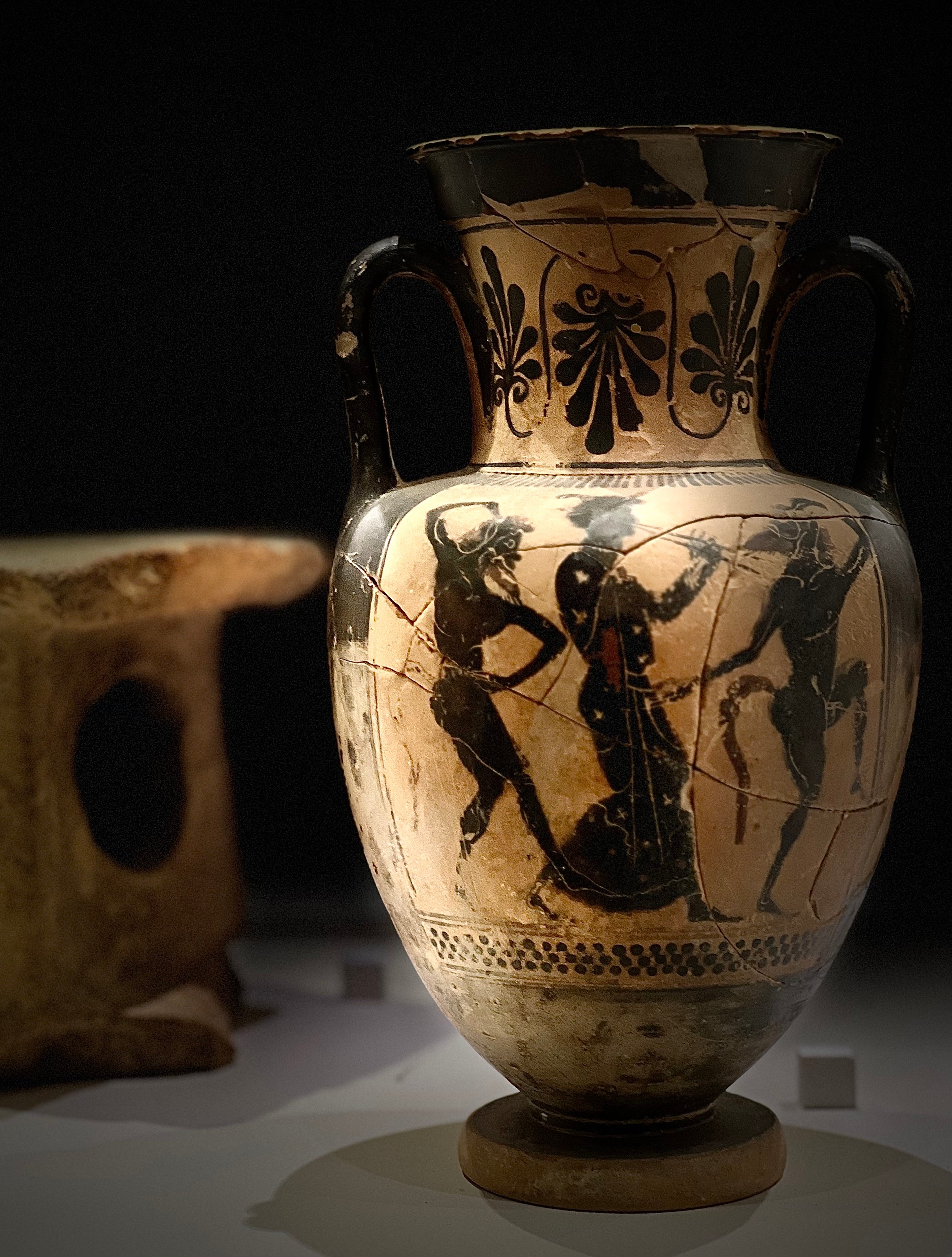
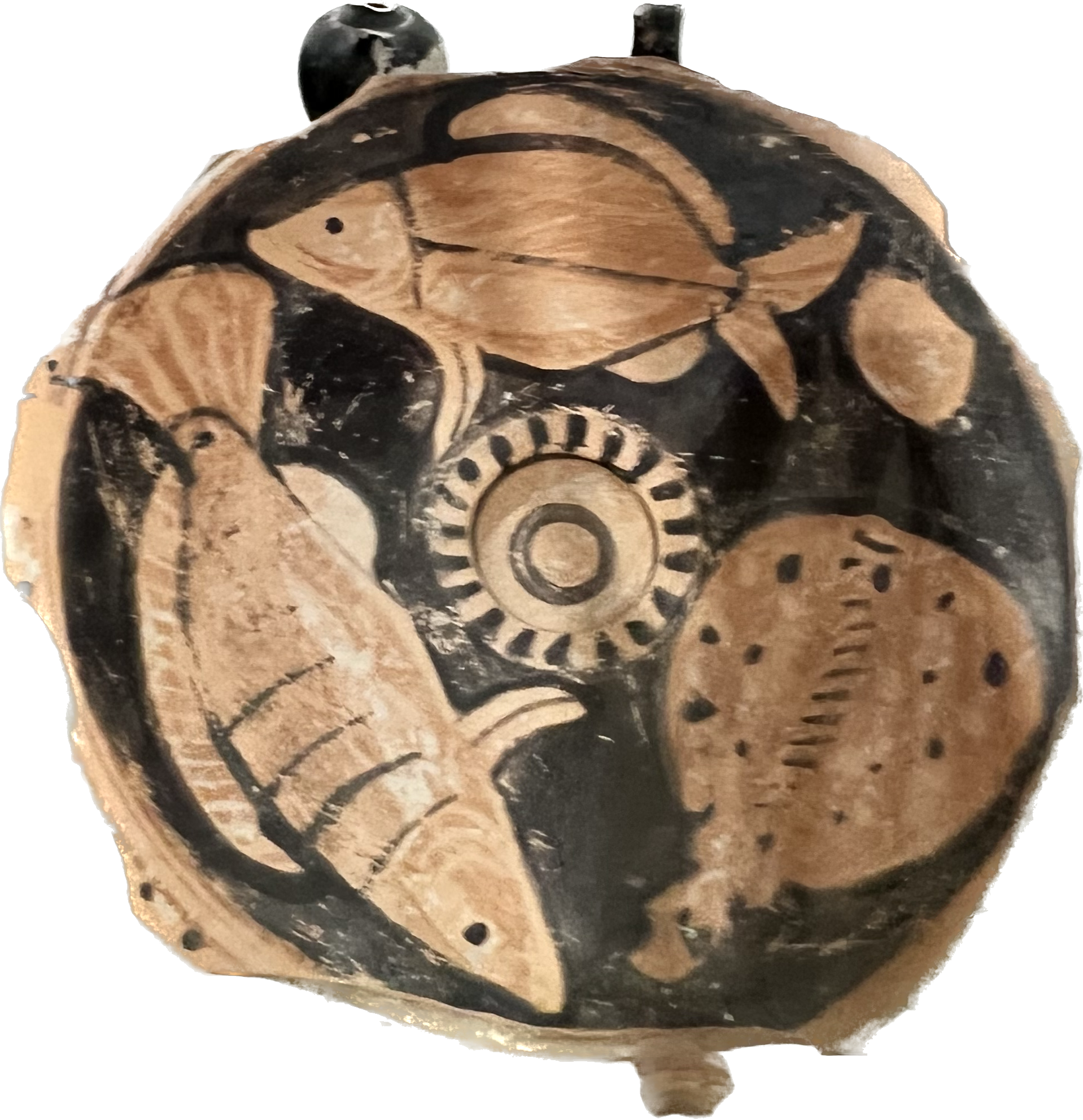
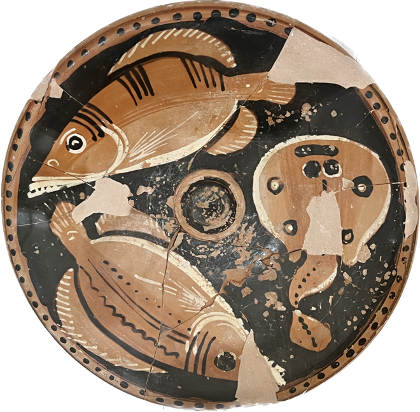
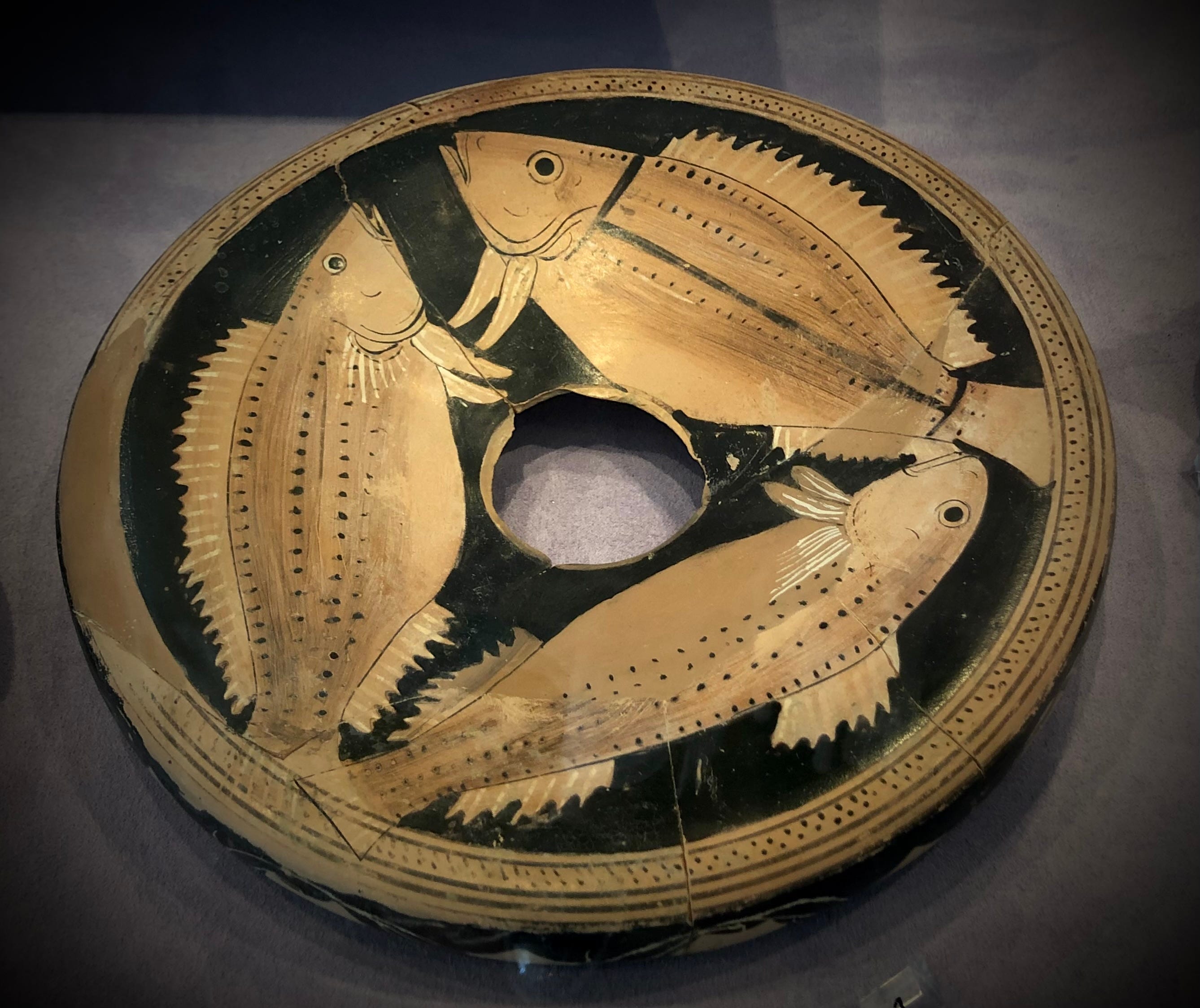
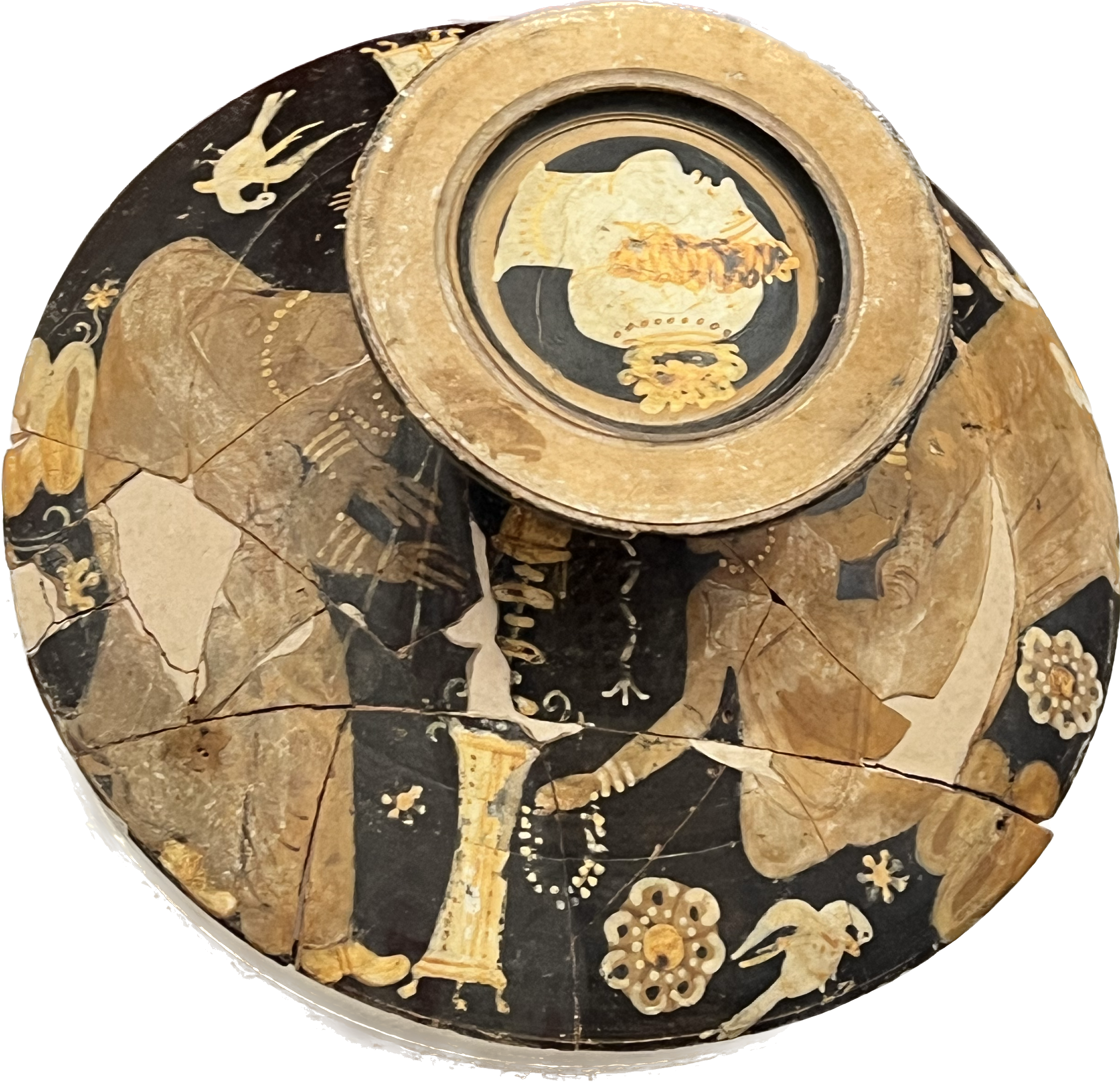
For all the Greek pottery that is held in private collections and fills museum vitrines, surprisingly fewer than a thousand of these red-figure fish plates are known to exist today. Above is one from the Joseph ‘Giuseppe’ Whitaker collection on the island of Motya in the Lo Stagnone, somewhat blurry as it was photographed through a dusty pane of glass. Below, an example that was found in a Punic necropolis in Palermo. Initially the artisans who produced these fish plates were not in Sicily, but elsewhere in the Mezzogiorno. They were people of the great Greek diaspora who settled in what are today Apulia, Calabria and Campania. (Did they move because Greece was on the brink of the Peloponnese Wars?) In the 5thcentury BCE they set up pottery workshops to supply the flourishing trade within Magna Graecia.
How our ancients must have loved and celebrated their seas, and what a bounty was chased through waters teeming with bream, wrasse, bass, perch, and red mullet. Fat and meaty cephalopods, testy crustaceans. From the unpretentious anchovies to majestic tuna, from fish that puff up to fish that fly – they ate them all. By some reckoning these plates were funerary artifacts so that the dead could continue to enjoy frutti di mare in the afterlife. Others disagree and claim the dish was part of daily life, but interestingly, no other food is as celebrated as is fish.
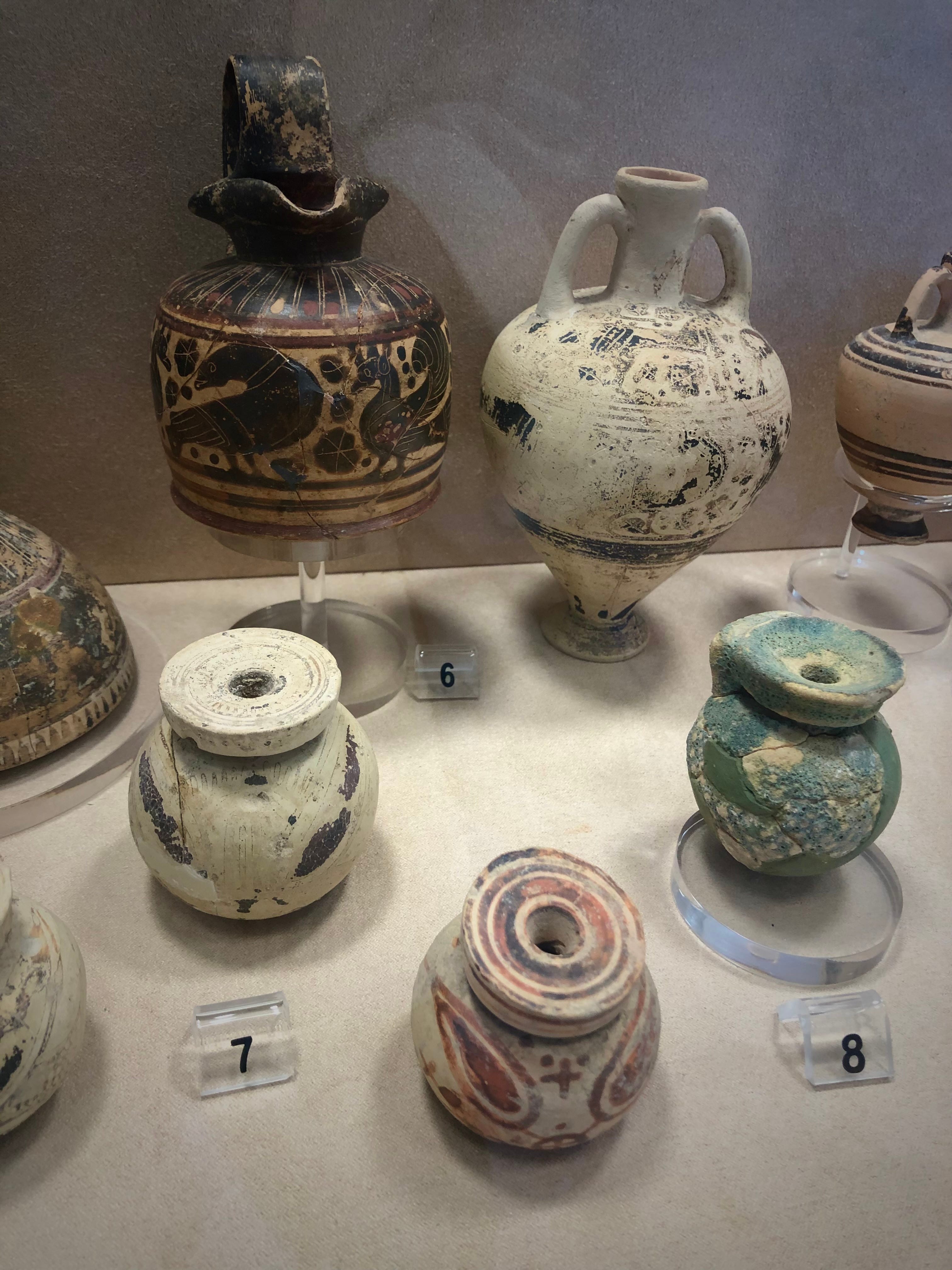
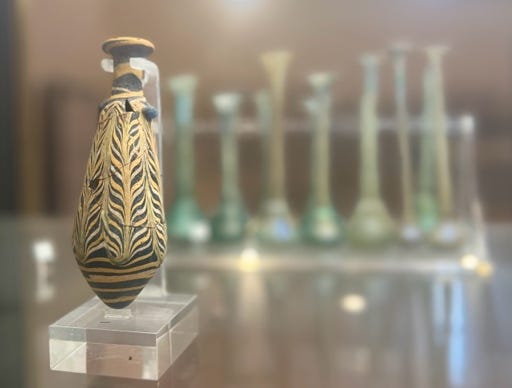
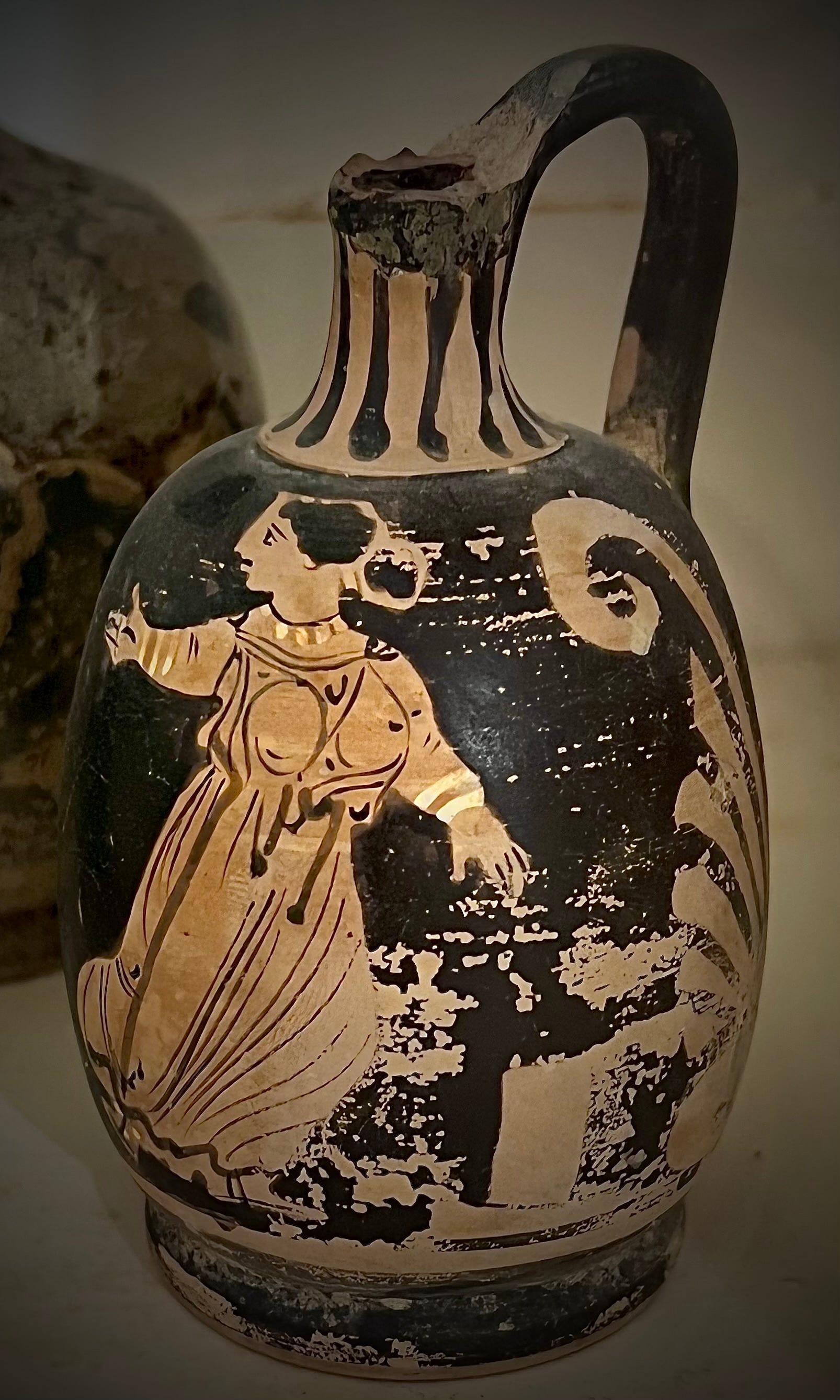
Does anything in our great breadth of material culture say quite as much about who we are as a people and a civilisation as pottery? The idea of clay, the act of conjuring a pot, and the way we used them changed our world irrevocably. Pottery is in that sense a triumph of the human capacity for ingenuity and innovation, a mastery of the four elements - earth, air, water and fire - in a process so perfect that little has changed in the millennia since early shards were discovered. There is no hurrying it along, no such thing as a fast-track kiln, and that is perhaps what saves it as a creative practice with the greatest capacity to affect us. In the patient shaping of clay on the wheel, our sensitive fingertips engages the brain in a multitude of sensations. In this small lump of dust and water, we invest ourselves fully, creating something outside of ourselves that is useful or beautiful or both.
I have always loved pottery and ceramics. There’s an accessibility with pottery in that most people can afford a pretty plate or other piece that represents a place or culture. There are pottery shops everywhere in Sicily, thriving, because visitors can take easily something home the way they can’t with a painting or sculpture. But as I write I realise that pottery can be powerfully inspirational. Say things go a little awry at the wheel. You try again. You take the do-over. Sometimes you get it right, other times the clay has its own ideas. Pottery is a vital reminder to keep going. Because the only way that a potter, like a writer, can fail, is to quit.
very studiously researched and profoundly scholarly. beautiful illustrations